

We may earn money or products from the companies mentioned in this post.
Most new owners ask this question the week their puppy arrives. The short answer is now. The American Kennel Club (AKC) recommends getting your puppy used to the leash as soon as it comes home. That’s true even before the vaccine series is finished.
The confusion comes from treating “training” and “walking around the neighborhood” as one decision. They’re two separate choices. This guide pulls them apart and gives you a plan based on readiness, not a calendar. It also lists the gear you actually need.
Optional paid training resource: For a broader daily training routine alongside these leash exercises, explore The Good Boy Guide, a digital 14-day training plan. We may earn a commission through these links.
Quick answer: Start gentle indoor leash training as soon as your puppy comes home, often around eight weeks. Public walks are a separate decision: ask your vet about vaccination and local disease risks.
| Practice location | When to start | First goal |
|---|---|---|
| Indoors | As soon as your puppy comes home | Comfort with a harness and slack leash |
| Quiet outdoor space | When your vet advises it is appropriate | Reward relaxed steps with few distractions |
| Public walks | Follow your vet’s advice on vaccines and local risks | Build confidence gradually |
Why the right starting age is the day your puppy comes home
Leash training starts when your puppy learns that a collar or harness feels normal and a leash is nothing to fear. Those first lessons fit easily into a kitchen or living room.
That’s why an eight-week-old puppy isn’t too young. At that age, you’re just building comfort with the gear and rewarding your puppy for staying near you.
The American Veterinary Society of Animal Behavior (AVSAB) calls the first three months an especially important time for socialization. It also encourages new experiences after that window. So a puppy who starts a little later hasn’t missed its chance.
Leash training at home vs. walking on public ground
Indoor practice and outdoor exposure carry different risks. Inside your home, the main risk is a scared or overwhelmed puppy. On sidewalks and in parks, the bigger worry is disease from unknown dogs, especially before vaccines are complete.
Why there’s no single “safe to walk” age
No universal age clears every puppy for public walks. The American Animal Hospital Association (AAHA) vaccination guidelines describe puppy boosters that continue beyond 16 weeks. In higher-risk situations, AAHA prefers a final dose at 18 to 20 weeks.
Be wary of any guide that promises your puppy can walk anywhere at exactly 12 or 16 weeks. Your vet knows your puppy’s vaccine schedule and the disease risk in your area. That makes your vet the right person to set the outdoor timeline.
Why trusted sources disagree about early outings
Respected groups don’t fully agree here. AVSAB supports puppy classes starting at seven to eight weeks, but only under conditions. Puppies should have at least their first vaccines and deworming, and the class space should be clean and controlled.
The SPCA of Northern Nevada takes a stricter line in its leash handout. It advises waiting until the vaccine series is complete before training in other places. Neither source supports open-ended public walks for a very young puppy. Ask your vet where yours fits.
A step-by-step plan that follows your puppy’s comfort
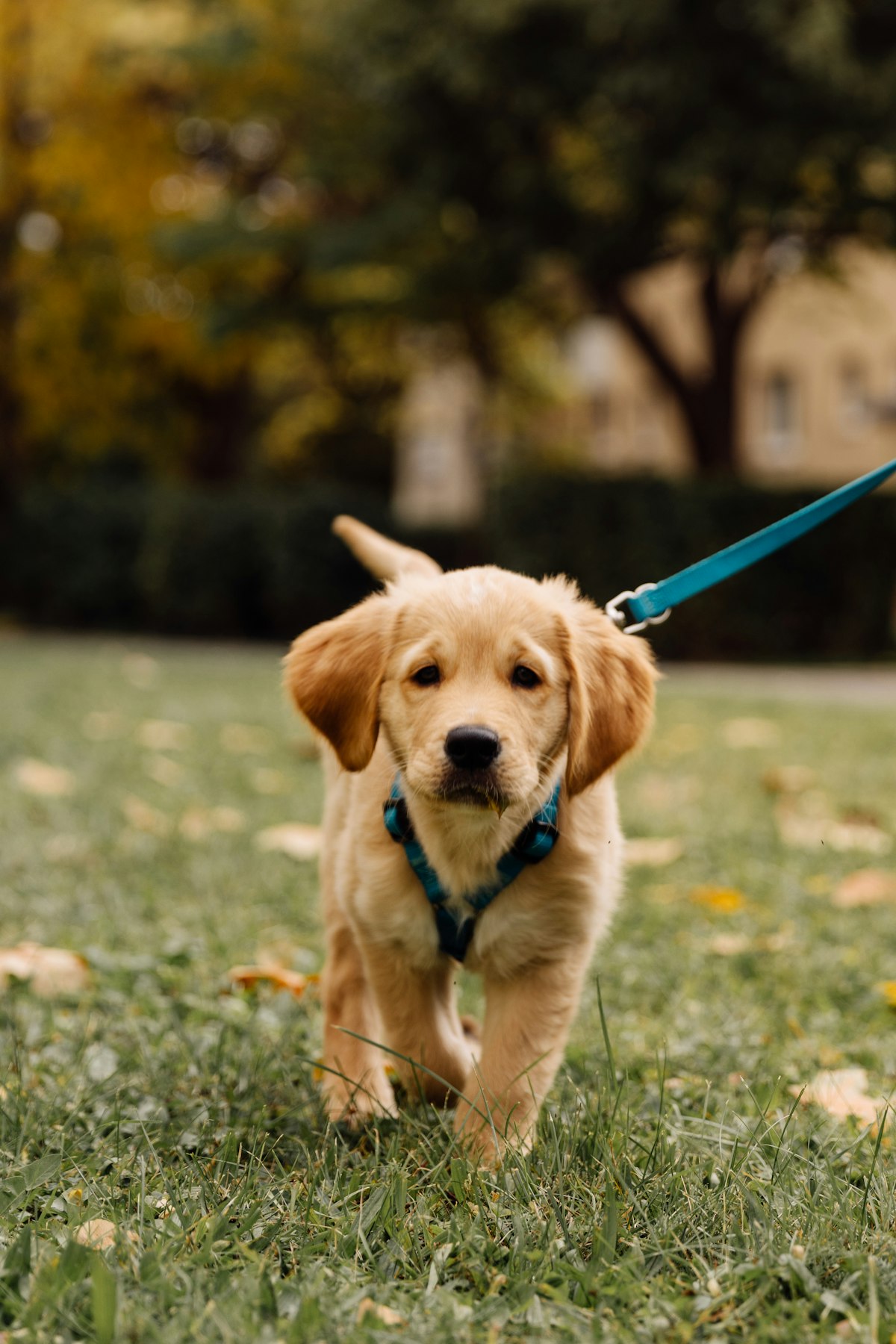
Move to the next step when your puppy is relaxed at the current one, not when a calendar says so. Some puppies move through the early stages quickly. Others need more time, and that’s normal.
Step 1: Get comfortable wearing the collar or harness
Put the gear on during calm moments, and pair it with treats or a meal. Keep the first sessions brief. If your puppy scratches at it, distract them with play and reward them once they settle.
Next, clip on the leash and let it hang loose while you watch closely. You aren’t steering yet, just teaching your puppy that the leash shows up alongside good things.
Step 2: Teach your puppy to follow you indoors
Pick up the leash, take a step or two, and reward your puppy for coming along. Keep the leash slack the whole time. Accepting the gear and taking a few steps beside you both count as real training.
Build up to short trips across a room, then down a hallway. Sessions that end while your puppy is still eager tend to go better than long ones that end in boredom.
Step 3: Move practice to a quiet outdoor spot
Once your vet says outdoor exposure is reasonable, choose a calm space with few distractions. A private yard helps, but you don’t need one. Steps 1 and 2 can continue indoors for as long as your puppy needs.
Expect lots of sniffing, stopping, and staring at first. Reward any moment the leash stays loose. That loose-leash walking is a different skill from a formal heel, which AKC treats as a separate lesson.
When your puppy handles quiet outdoor practice well, you can move on to the next stage of walking without pulling
The only gear a puppy needs for leash training
You don’t need a cart full of gadgets. AKC’s guidance points to three basics:
- A well-fitted harness or collar. AKC favors a properly fitted harness for many puppies.
- A lightweight, fixed-length six-foot leash. AKC recommends this over a retractable leash.
- Small treats your puppy loves. Rewards are your main teaching tool.
Fit matters more than brand. Gear should stay put without rubbing, and puppies grow fast, so recheck it often. A heavy leash can feel odd to a small puppy, so lighter is usually better.
Leave out prong collars, shock collars, and leash jerks. AVSAB’s position supports reward-based training and rejects harsh methods, including leash corrections. These tools can teach a puppy to fear the walks you want them to enjoy.
When your puppy freezes, bites the leash, or pulls
Most early problems aren’t stubbornness. A puppy who stops may be unsure, overwhelmed, tired, or uncomfortable, so treat it as a clue to how they feel.
- Freezing or sitting down: Don’t drag your puppy forward. Go back to an easier step, crouch down, and reward any movement toward you.
- Biting the leash: This is common in young puppies. Offer a toy instead, and reward your puppy when they leave the leash alone. You can find more help with puppy leash biting
- Pulling: Stop moving when the leash gets tight. Reward your puppy as soon as it goes slack again.
- Scratching at gear or yelping: Check the fit right away. Rubbing or pinching can look a lot like resistance.
Talk to your veterinarian if fear seems strong, keeps coming back, or gets worse. AVSAB specifically recommends vet guidance for fearful puppies. Your vet can also check for pain before you change your training plan.
How free leash training guides compare
Several free guides cover this topic, and each has a different strength. All of them were free to read when we checked on November 23, 2026.
| Guide | Best for | Watch out for |
|---|---|---|
| AKC | Detailed steps with input from credentialed trainers | Covers far more than the starting-age question |
| Rover (updated July 27, 2026) | Easy instructions and plenty of troubleshooting | Outdoor steps don’t explain vaccine-related timing |
| SPCA of Northern Nevada | A short handout on indoor starts and reward timing | Stricter waiting rule than AVSAB’s class guidance |
| Healthy Puppy Review (October 21, 2026) | A four-week plan with equipment ideas | A fixed schedule may not suit every puppy; listed gear prices date from October 2026 |
The Healthy Puppy Review article, by James Martin, is a handy starting point if you like a structured plan. Just let your puppy’s comfort set the pace, and check gear prices yourself before buying.
Questions owners ask about puppy leash training
Is it too late to start leash training an older puppy?
No. AVSAB encourages continued exposure and learning after the first three months. Start at Step 1 with an older puppy too, then move ahead as quickly as their comfort allows.
How long should early leash sessions be?
Keep them short and end on a success. Our research found no proven universal number of minutes. Watch your puppy instead, and stop before they get tired, frustrated, or distracted.
Should I clip the leash to a harness or a collar?
A harness is often the better pick for a young puppy, and AKC favors one for many puppies. Whichever you choose, make sure it fits snugly without rubbing.
Should you start leash training your new puppy this week?
Yes, for nearly every new puppy. Starting indoors right away is the best- supported advice in our research. It suits first-time owners and anyone still waiting on vaccines, since it needs no outdoor exposure.
The biggest limit is that no guide can hand you a universal outdoor date. That depends on your puppy’s vaccines and local disease risk, so your vet should make that call.
The method costs only a fitted harness, a light leash, and treats. Pair reward-based steps with your vet’s advice, and you’ll be well on the way to a confident walker.
As your puppy gains confidence outdoors, practice the leave it cue to help them turn away from tempting objects on walks.
Optional dog training resource: The Good Boy Guide

The vendor describes a two-week digital plan with short daily exercises, a puppy routine, command reference and family training tracker. This is an optional paid resource, not a substitute for the free exercises above or professional guidance. We have not independently tested the program; individual results vary. We may earn a commission if you purchase.