

We may earn money or products from the companies mentioned in this post.
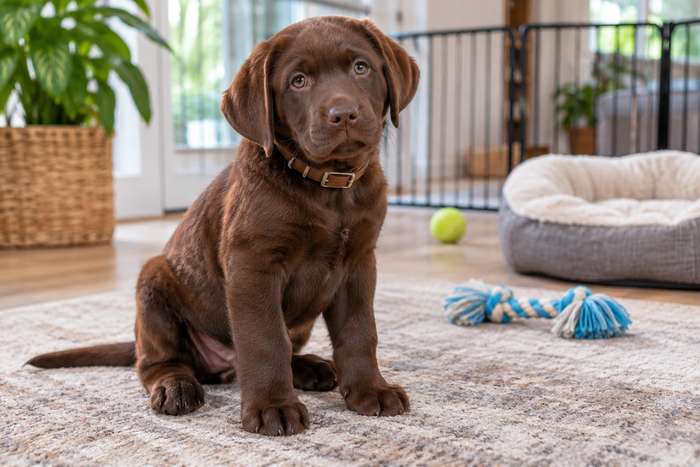
Your new chocolate Lab puppy needs meals, toilet trips, sleep, training, and vet care all at once. Most guides cover the whole first year, so it’s hard to tell what matters this week.
This guide splits the first month into four stages by days at home. Our example puppy arrives at about eight weeks old, but older arrivals can follow the same steps. The plan draws on AAHA, AVSAB, VCA Hospitals, and AKC guidance. It cannot promise a puppy who sleeps through the night or never has accidents by day 30.
Optional paid training resource: For help organizing short daily training sessions with your new puppy, explore The Good Boy Guide, a digital 14-day training plan. We may earn a commission through these links.
First-month checklist: Prepare a safe puppy area, arrange a vet visit, keep meals and toilet breaks predictable, introduce new experiences safely and begin gentle reward-based training.
- Days 1–3: settle in, maintain familiar food and establish toilet breaks.
- Days 4–7: repeat a predictable cycle of meals, toilet trips, play and naps.
- Days 8–14: introduce safe new experiences with veterinary guidance.
- Days 15–30: practice gentle handling, consistent cues and indoor leash skills.
Example daily routine: Wake and toilet, breakfast and toilet, brief play or training, then rest. Repeat the cycle with regular meals and finish with calm time and a final toilet trip. Adapt the routine to your puppy’s needs. See our guide to when to start leash training.
Does a chocolate coat change how you care for a Lab puppy?
No. Chocolate is a Labrador coat color, not a separate breed. Your puppy needs the same food, training, and vet care as a black or yellow Lab.
A 2018 UK Royal Veterinary College study of Labrador veterinary records found associations between chocolate coats and more ear and skin problems and shorter average lifespans. That study does not prove that coat color causes illness. Claims that chocolate Labs are inherently wilder also lack solid evidence.
What to buy and prepare before your Lab puppy comes home
These essentials cover the first month:
- A crate with a divider panel so it can grow with your puppy
- Baby gates or an exercise pen for a safe puppy zone
- The food your breeder or shelter already uses, plus bowls
- A collar or harness with an ID tag and a lightweight leash
- Several chew toys with different textures
- Enzyme cleaner to break down urine odor
- A secured crate or car restraint for the drive home, never a loose puppy on someone’s lap
Puzzle feeders, fancy beds, and extra gear can wait until you know what your puppy needs. Puppy-proof the rooms your puppy will use: remove cords, shoes, children’s toys, trash, and small objects they might swallow. Offer suitable chew toys.
Ask the breeder or shelter for vaccination and deworming records, the food brand, and the current meal schedule. Book a veterinary visit for your puppy’s first few days at home.
Days 1 to 3: arrival, first meals, and the first nights
Carry your puppy straight to the outdoor toilet spot you want them to use. When they go, give quiet praise and a small treat. Repeat after naps, meals, and play.
Keep the first days calm. Skip the welcome party and let your puppy explore one gated area with one or two family members nearby. Feed the same food they already know. Ask your vet before changing food, and transition gradually to avoid stomach upset.
For the first nights, place the crate near your bed so your puppy can hear and smell you. If they wake and whine, take them out with little talk or play, then return to bed. Accidents happen: clean with enzyme cleaner and increase outdoor breaks. AVSAB recommends reward-based training rather than punishing accidents.
Days 4 to 7: a daily routine your Lab puppy can count on

By the end of the first week, aim for a predictable cycle:
- Wake up and go straight outside for a toilet break.
- Eat breakfast, then take another toilet trip.
- Play briefly and train for a few minutes.
- Nap in the crate or pen.
- Repeat toilet, play, learn, and rest, with meals at regular times.
- Wind down with calm time and a final toilet trip before bed.
Someone should be home or able to return often early on. Plan work and family schedules before pickup day. Base portions on your puppy food’s instructions for age and weight and measure every meal: foods differ in calories.
Choose a complete and balanced growth food formulated for large-breed puppies. Such foods manage calcium and other minerals for steady growth. Do not add calcium supplements on your own; ask your vet to assess body condition and adjust portions.
Days 8 to 14: safe socialization before vaccines are finished
Socialization can start before the vaccine series is finished when you choose safe settings. AVSAB supports early socialization during this important learning window. Suitable puppy classes may accept puppies from about seven to eight weeks after at least one vaccine set seven days beforehand and initial deworming; keep subsequent vaccinations on schedule.
- Carry your puppy to observe traffic, shops, and people.
- Arrange playdates with healthy, vaccinated adult dogs you know.
- Introduce new sounds, floors, and objects at home, pairing them with treats.
- Choose a well-run puppy class that checks vaccine records.
Avoid dog parks and places where unknown dogs gather and toilet. Ask your vet about local disease risks. Keep lessons short and fun: reward responses to their name, sitting, and coming to you. When teeth land on skin, offer a toy instead and pause play briefly if biting continues.
Days 15 to 30: handling, consistency, and first leash steps
Practice gentle handling daily. Touch paws, look in ears, lift lips, and brush the coat while offering treats. This prepares your puppy for vet visits and helps you notice ear or skin changes.
Begin leash practice indoors. Let the puppy wear a collar or harness, clip on the leash, and reward steps taken near you. If the leash becomes a chew toy, read our guide to stopping puppy leash biting.
Keep outdoor walks short and easy. Adult Labrador exercise targets do not apply to a young puppy. As your puppy becomes comfortable, start building loose-leash walking foundations; formal heeling is not a first-month goal.
Consistency matters more than new tricks. Everyone at home should use the same cue words, toilet spot, and rules about furniture and biting.
First-month vet care: vaccines, parasites, and when to call
AAHA lists five core vaccine targets for US dogs: distemper, adenovirus, parvovirus, leptospirosis, and rabies. Your veterinarian should set the exact puppy vaccination schedule based on age, records, local rules, and risk. Ask about deworming and parasite prevention at the first visit.
Get local cost quotes for vaccines, parasite prevention, food, and classes. If considering pet insurance, check how it handles conditions identified before enrollment.
Call your vet promptly if diarrhea occurs with low energy, weakness, refusal to eat, vomiting, or blood in the stool. Do not dismiss these signs as settling-in stress.
Free Lab puppy resources that pair well with this plan
- AKC Labrador puppy milestone timeline: breed-specific training milestones spanning the first year.
- AVSAB puppy socialization position statement: guidance on balancing socialization and infection risk.
Quick answers to common first-month Lab puppy questions
How often should an eight-week-old Lab puppy eat?
Keep the number of meals used by your breeder or shelter, measuring portions according to the food label. Several smaller meals help you track appetite and establish toilet timing. Your veterinarian can tailor the plan.
Should my puppy be fully toilet-trained after 30 days?
Probably not. Look for fewer accidents, more successful trips outside, and a puppy who starts heading toward the door. Full reliability usually takes longer.
Will my Lab puppy sleep through the night this month?
Some do, but many still wake for toilet trips. Keep night outings quiet and stick to the crate routine. Mention sudden worsening of night waking to your vet.
Who this first-month Lab puppy plan works best for
This plan suits first-time Labrador owners who want a clear order of tasks. Your veterinarian should tailor vaccines, food amounts, and outing risk to your puppy. Owners already following a reliable breeder routine may need only selected sections. The plan is free to follow and reflects veterinary and behavior guidance.
Optional dog training resource: The Good Boy Guide

The vendor describes a two-week digital plan with short daily exercises, a puppy routine, command reference and family training tracker. This is an optional paid resource, not a substitute for the free exercises above or professional guidance. We have not independently tested the program; individual results vary. We may earn a commission if you purchase.