
We may earn money or products from the companies mentioned in this post.
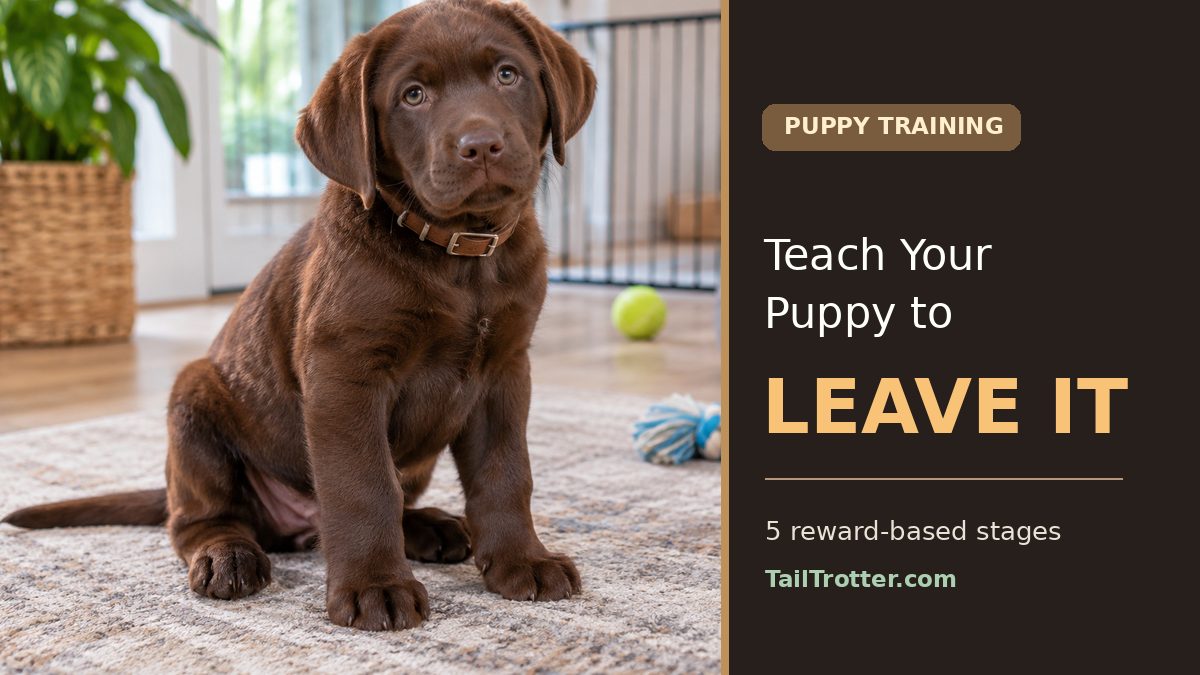
Puppies explore with their mouths. A sock, a dropped pill, or a chicken bone on the sidewalk can get chewed in seconds. “Leave it” teaches your puppy to turn away from something tempting before it reaches their mouth.
Our research compared guides from Dogs Trust, Best Friends Animal Society, Purina, and the Guide Dog Foundation. Their methods differ in small ways. This guide follows one plan: reward the turn-away first, add the cue second, then raise the difficulty slowly.
Optional paid training resource: For extra structure as you practice attention and everyday cues, explore The Good Boy Guide, a digital 14-day training plan. We may earn a commission through these links.
Quick answer: Start with a low-value treat in a closed fist. Reward your puppy from your other hand when they turn away. Repeat until the response is reliable, add the cue, then progress to an open palm and a protected treat on the floor. Practice in quiet places before trying walks.
What “leave it” means, and when you need “drop it” instead
“Leave it” means “don’t touch that, and turn away.” You say it before your puppy grabs something. “Drop it” is a separate skill that asks your puppy to let go of something already in its mouth.
Most puppies need both. Teach them as different cues so your puppy doesn’t have to guess which one you mean.
What you need before your first “leave it” session
- Two kinds of treats: a plain, low-value treat as the temptation, plus a food your puppy loves more as the reward.
- A safe practice item: start with a treat in your closed hand. Never use medication, toxic food, or anything small enough to swallow by accident.
- A quiet room with few distractions.
- A marker word like “yes” to tell your puppy the exact moment it got it right.
- A leash for the floor and outdoor stages later.
One rule applies to every stage: the item your puppy ignores never becomes the reward. The reward always comes from your other hand. Otherwise, “leave it” turns into “wait a bit and you’ll get it.”
You don’t need correction collars or special gear. The American Veterinary Society of Animal Behavior recommends reward-based training and rejects aversive methods. Its board reaffirmed that position in 2025.
Teaching “leave it” in five stages
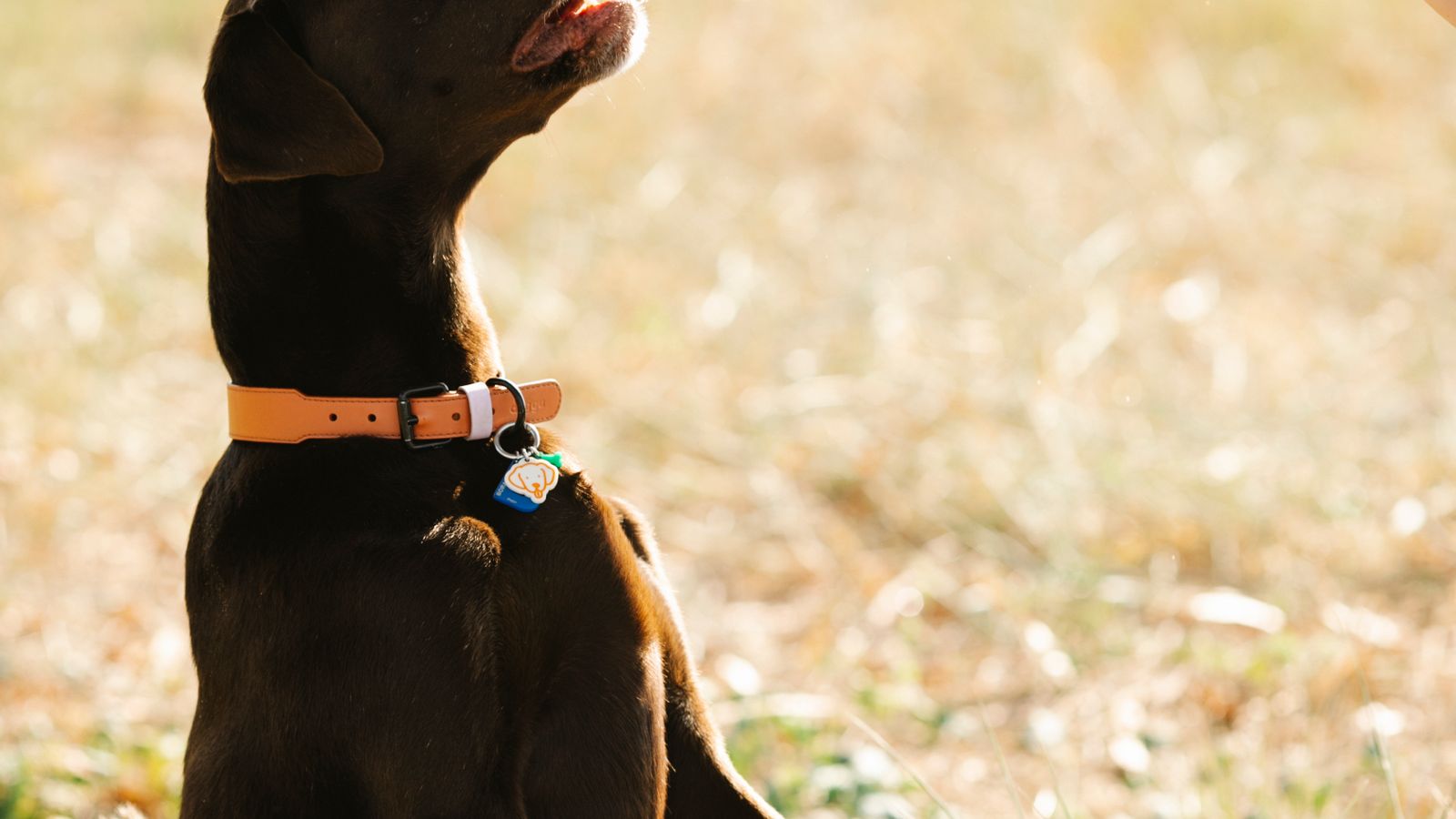
Stage 1: Reward your puppy for turning away
Put a low-value treat in a closed fist near your puppy’s nose. Let it sniff, lick, or paw, and say nothing. The instant it pulls back or looks away, say “yes” and give a better treat from your other hand.
Early on, a brief head turn is enough. You’re paying for the choice to back off, not a long stare at you.
Stage 2: Wait for a quick, confident turn-away
Keep practicing until your puppy backs off almost as soon as your fist appears. Some puppies start looking at your face instead. That’s a clear sign it understands the game.
Stage 3: Add the words “leave it”
Now say “leave it” once, calmly, right before you present your fist. Mark and reward the turn-away as before. Adding the cue only after the behavior is reliable links the words to success instead of pawing.
Stage 4: Open your hand
After the cue, show the treat on a flat palm. If your puppy moves toward it, close your hand. Reopen it once your puppy backs off, then mark and reward.
Stage 5: Move the treat to the floor
Place the treat on the floor and cover it with your hand or foot. Once your puppy turns away reliably, leave it uncovered while you stay close enough to block it. Pick the floor treat up yourself after each try.
Why “leave it” works indoors but fails on walks
Indoor success doesn’t carry over outside on its own. Every new place adds smells and sounds, so treat it as a fresh, harder lesson.
Practice in other rooms first, then the yard, with your puppy leashed so you can stop it from reaching the item.
On walks, set a treat or toy where your puppy will pass at a distance. Say “leave it” before it lunges, and reward the turn-away. Move closer only after it succeeds at the current distance. If walks are still new, start with introducing your puppy to a leash
Fixes for a puppy that won’t leave it
Most failures mean the exercise got hard too fast. The leading guides agree on the fix: go back to an easier stage and rebuild.
- Your puppy grabs the item: block it, then return to the previous stage for a few tries.
- It only works when treats are visible: once your puppy is reliable, keep rewards in a pocket so it isn’t watching your hand.
- You keep repeating the cue: say it once. Repeating teaches your puppy the first one doesn’t count.
- Your puppy gets frustrated: end with an easy win and keep sessions short.
What to do if your puppy already swallowed something
Stop training and get help. The ASPCA advises calling your veterinarian or an animal poison control line promptly after a possibly hazardous ingestion. Do this even if your puppy seems fine. Severe signs need emergency vet care, and you should never try to make your puppy vomit unless a vet tells you to.
Common questions about puppy “leave it” training
How young can a puppy start learning “leave it”?
You can start any time. The Guide Dog Foundation says you can introduce the cue at any point. Your puppy doesn’t need to master sit or down first.
How long does it take a puppy to learn “leave it”?
There’s no set timeline. Move to the next stage when your puppy succeeds at the current one, not by the calendar.
Do I need a clicker to teach “leave it”?
No. A consistent spoken word like “yes” works as a marker.
Is “leave it” worth teaching your puppy now?
Yes, especially for puppies that scavenge indoors or on walks. It gives you a calm way to stop a grab before it happens, using treats you already have.
The biggest limit is reliability outdoors, which takes separate practice. Even a well-trained puppy still needs medications, toxic foods, and small objects kept out of reach.
Optional dog training resource: The Good Boy Guide

The vendor describes a two-week digital plan with short daily exercises, a puppy routine, command reference and family training tracker. This is an optional paid resource, not a substitute for the free exercises above or professional guidance. We have not independently tested the program; individual results vary. We may earn a commission if you purchase.